Tea, Solder and Solidarity: The Queer Repair Cafés Rewiring Community
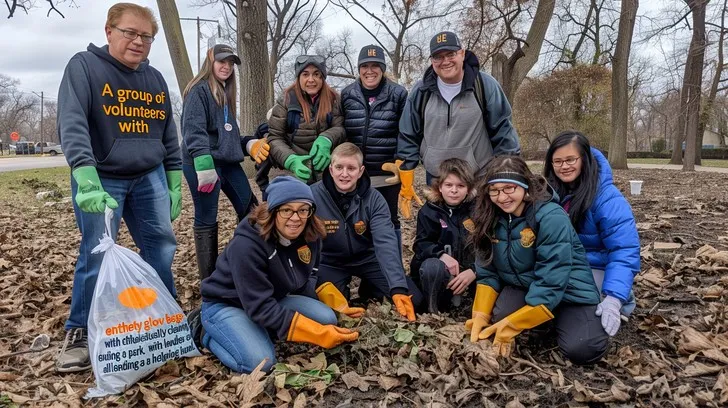
Photo: volunteers repairing small appliances and clothes at a community repair cafe table with tea mugs UK, via images.stockcake.com
It’s a Saturday morning in a church hall in east Bristol, and the queue is for a broken toaster. No bouncer, no dress code, no thumping bass. Just a trestle table, a tangle of extension leads, a urn of tea and a handwritten sign that reads: ‘We’ll show you how, not do it for you.’
This is a repair café — one of a growing number across the UK where volunteers help people fix faulty lamps, ripped jackets, wobbly chairs and knackered hairdryers. What’s less obvious from the sign is that this particular session is run by a queer collective, and most of the people drifting in with carrier bags of broken things are LGBTQ+ too. Nobody checks. Nobody needs to. You can tell from the playlist (Sophie, then Dusty), the pronoun badges on the toolbox and the fact that someone has brought a plate of vegan flapjacks.
The opposite of a throwaway scene
Repair cafés have been around for years, part of a broader movement against the UK’s bin-and-replace habit. But the queer versions feel different. They’re not just about keeping a kettle out of landfill. They’re about practising a kind of care that doesn’t require you to be flushed, dressed up or three pints in.
‘Queer life is often framed as disposable — our bodies, our histories, our venues,’ says Rae, 34, who helps run the Bristol session. ‘So there’s something quietly defiant about refusing to bin a thing just because it’s scuffed. We’re saying: this is worth mending. You’re worth mending. It’s not subtle, but it’s not a lecture either.’
The setting helps. A church hall is not a gay bar. There’s no mirror to check yourself in, no smoking area politics, no fear of being asked why you’re on your own. You can turn up with a broken radio and leave with a working radio and a phone number for someone who also likes obscure synth-pop. The intimacy is practical, not performative.
A different kind of table
At the repair table, you learn the person next to you by their hands. One volunteer, a softly spoken trans man called Milo, is teaching a nervous teenager how to rewire a plug. ‘Hold the screwdriver like this. Yeah, that’s it. Now tell me what you think happens next.’ He doesn’t take over. He waits.
That’s the rule at most queer repair cafés: consent first, skills always. Can I touch your bike? Want me to hold the torch while you do it? Do you want advice or do you want company? It’s a small thing, but it’s the same grammar as good sex and good friendship. The point isn’t to fix the object for someone. It’s to leave them more confident than they arrived.
‘We get people who’ve never been to a queer space before because bars feel like a performance,’ Rae says. ‘Here they can just be useful. They can be the person who knows how to fix a zip. That’s a different kind of coming out.’
Sober, daytime and nobody’s asking you to dance
Not everyone wants a glue gun and a glass of wine. Not everyone can afford the club, or stay out past 9pm, or breathe in a basement. For sober queer people, disabled people, neurodivergent people and anyone whose social battery dies at the door, the repair café is not a compromise. It’s the main event.
There’s tea. There are biscuits. There’s a quiet corner with a jigsaw puzzle. There’s no pressure to drink, no music so loud you have to lip-read, no expectation that you’ll stay until the lights come up. The club queue is a filter; the repair table is a level. Everyone brings something broken. Everyone is a beginner at something.
In Leeds, a trans-led repair café runs monthly in a community centre and has become a de facto support group. ‘We had someone bring a chair that had been in their family for forty years,’ says organiser Sam, 29. ‘They didn’t just want it fixed. They wanted to sit in it without feeling sad. We couldn’t do that bit, but we could show them how to re-glue the joint. Sometimes that’s enough to start.’
From Glasgow to London, a quiet network
Nobody knows exactly how many queer repair cafés are operating in the UK, partly because most are small, volunteer-run and deliberately low-key. You’ll find them in church halls, community centres, libraries and the back rooms of friendly bookshops. There’s one in Glasgow that meets on the first Sunday of the month; another in Manchester that rotates between venues and always has a ‘bike corner’. In London, a queer repair night in Peckham has a waiting list for its sewing machines.
What they share is a refusal to separate the practical from the political. Fixing a lamp is not going to end transphobia. But doing it together, in a room where you don’t have to explain your pronouns or justify your existence, is a form of mutual aid that feels tangible. No means-testing, no saviour complex, no one asking why you didn’t just buy a new one.
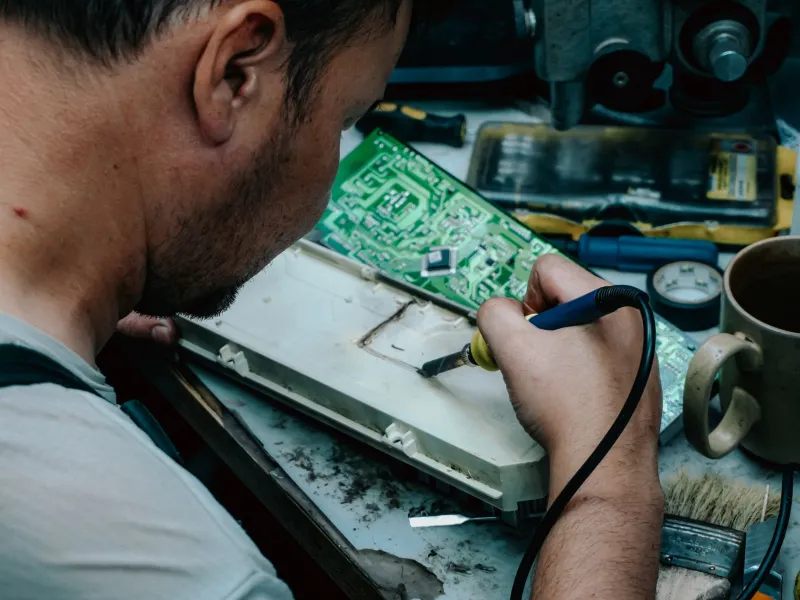
‘The best thing we ever fixed was a friendship,’ says a regular called Jo, 41, who brings a different broken object every month. ‘I came for a kettle. I stayed because someone taught me how to solder and didn’t make me feel stupid. Now I’m the one teaching. That’s the whole point, isn’t it?’
The politics of a wobbly chair
It would be easy to make a metaphor out of all this — broken things, broken people, mending as a queer art. But the volunteers are quick to resist that. Nobody is fixing people. They’re fixing objects, and the people part happens anyway, in the gaps between screws and stitches.
Still, there’s a politics to it. Queer spaces are often rented, temporary and under threat. A repair café is a way of practising permanence: showing up on a Saturday, learning a skill, passing it on, keeping something going. It’s also a practical answer to the climate crisis that doesn’t require anyone to be perfect. You don’t have to be a sustainability influencer to reattach a handle.
And it’s a reminder that community doesn’t always look like a party. Sometimes it looks like a man in a cardigan patiently explaining the difference between a fuse and a resistor while a dog sleeps under the table. Sometimes it looks like a ripped denim jacket getting a second life because someone said, ‘I can show you how.’
So next time the kettle dies, or the seam goes on your favourite jacket, or the chair in the corner starts to wobble — don’t bin it. Find a table. Bring your broken thing. Bring your broken self, if you like. There’ll be tea. There’ll be someone with a screwdriver. And there’ll be no queue for the toilets.