Static Is a Love Language: Why Queer Radio Won't Be Quietly Cancelled
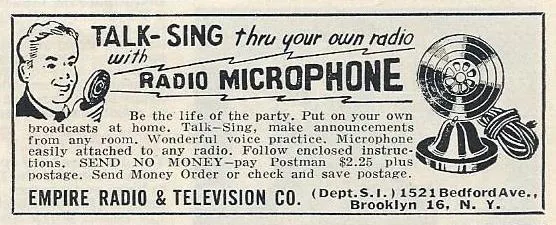
Photo: Joe Haupt from USA, Public domain, via Wikimedia Commons
It's 11.47pm on a Tuesday in a terraced house on the edge of Hull. There's a duvet taped over the window, a borrowed mixer with one dead channel, and a laptop running so hot it's started making a noise of its own. The presenter — let's call them Ash, because that's what the show's intro says — leans in and goes: "You're listening to us. You're listening to us at nearly midnight on a school night, and honestly, same."
A few hundred people hear that. Some are in kitchens. A couple are in cars parked outside their own homes because they're not ready to go in yet. One is on a ward in a hospital two counties away, headphones in, curtains half-drawn. Nobody claps. Nobody's watching. That's sort of the point.
The most accessible room we've got
Here's the thing about queer nightlife, and I say this with enormous love: it asks a lot. It wants a ticket, an outfit, a bus home, a level of nerve that not everyone has on a wet Wednesday in February. It wants you to be seen.
Audio asks none of that. You can be in bed. You can be mid-crisis. You can be fifteen and stuck in a village with one bus a day and a dad who doesn't know yet. Radio doesn't check your outfit at the door. It arrives, uninvited but welcome, at the volume you choose.
That's why the current crop of volunteer-run queer stations and podcasts feels less like media and more like infrastructure. In 2026 you've got community radio licence holders doing weekly queer slots in Bradford and Bristol, a trans-led station in south Wales that's been running on Patreon and sheer spite for years, a hyperlocal podcast in Norfolk that functions, genuinely, as the area's only reliable queer listings service. There are pirate-adjacent internet streams, Mixcloud archives, a Glasgow outfit that broadcasts from a pub back room and once did a four-hour show about the correct way to leave a party.
None of it is slick. All of it is someone's Tuesday night.
A licence is a five-year promise
Community radio in the UK isn't a hobby you can just start on a whim. Ofcom hands out five-year community licences with conditions attached — you need to be a social enterprise of some kind, you need a certain proportion of volunteers, you need to demonstrate 'social gain'. Which is a dry bureaucratic phrase for something quite beautiful: prove to the regulator that your neighbours are better off because you exist.
The queer stations do that bit easily. They do the other bit — the money bit — with considerably more swearing.
Transmitters cost. Studio time costs. PRS and PPL licensing costs, and if you're streaming on top of broadcasting you're paying for hosting, bandwidth, and the emotional toll of a takedown notice landing in your inbox on a Friday. A DAB multiplex slot is a number that will make you laugh out loud the first time you hear it and then go quiet. Most of these operations run on a patchwork of small grants, benefit gigs, merch, and a recurring donation page that three people check obsessively.
And yet. The stations keep turning up. When one goes dark for a month, another one's volunteers will quietly send over a spare mic or run a fundraiser. There's a group chat. Obviously there's a group chat.
The 2am phone-in is the whole thing
If you want to understand why this matters, listen to the late stuff. The trans advice hour that starts at one in the morning because that's when people are awake and scared and finally alone with a phone. The first twenty minutes are often silence — dead air, which on community radio is less an error than a held breath. Then the lines light up all at once, three callers deep, and the presenter gets that particular voice on: warm, unhurried, the voice of someone who has done this before and is not going anywhere.
There's no algorithm pushing you towards it. No comment section underneath. Nobody's about to quote-tweet your worst night. It's one voice to many, which paradoxically feels more private than a DM — you're not being replied to, you're being accompanied.
Compare that to the rest of the internet in 2026, which is largely a machine for making you feel observed. Radio is the last place where being listened to doesn't require being looked at.
The listings read like a poem
My favourite thing about these stations is how small they're allowed to be. A Manchester show that spends ten minutes every week describing which venues have step-free access and which have a toilet you can actually change in. A Cumbrian podcast where the community news segment is genuinely fifteen minutes long because there is genuinely fifteen minutes of community news if you bother to find it. A Bristol station that reads out local queer gig listings in a voice so deadpan it becomes a kind of poetry: Thursday, the pub. Friday, the other pub. Saturday, the arts centre, £6, bring cash.
This is the stuff the big platforms can't do, because it isn't scalable and it isn't sexy and it doesn't trend. It's also the exact information that keeps people alive and socialised in places the metropolitan gaze forgets exist.
What it asks of you
Keeping a signal alive is unglamorous work. It's learning how to use a desk you didn't train on. It's editing a two-hour show down at 1am. It's the volunteer who does the admin and gets thanked once a year. It's the fact that burnout is the number one cause of dead air in this sector, not transmitters.
So if there's a queer station in your area — and by 2026 there probably is, even if it's just a monthly podcast recorded in somebody's spare room — the ask isn't complicated. Listen live where you can, because the live bit is what the grants get assessed on. Chuck a fiver at the donation page instead of the third coffee. Send a voice note. Turn up to the fundraiser. Offer to do the admin nobody wants.
And if there isn't one near you? Start one badly. That's how all the good ones started. Badly, at midnight, with a duvet over the window and a mixer with one dead channel, saying you're listening to us to maybe forty people.
Forty's plenty. Forty's a room.