Six Strangers, One Question Card: The Queer Nights Where Making Friends Is the Whole Point

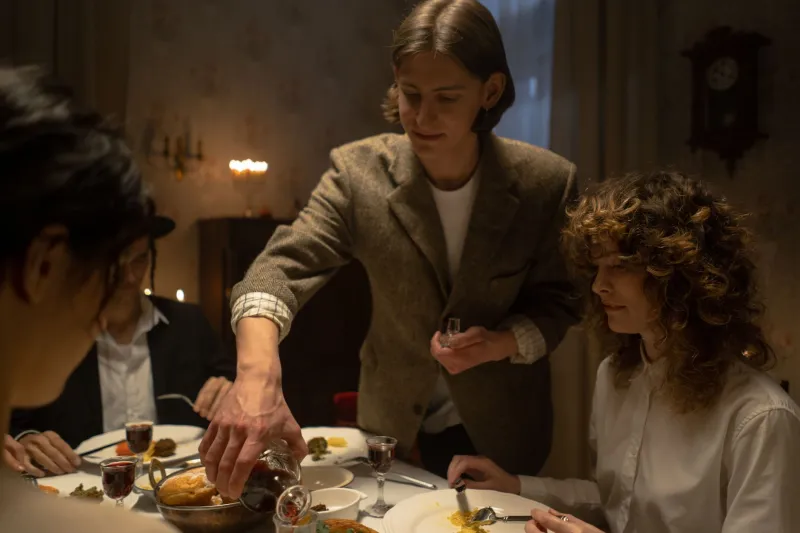
It is a Thursday night in a Manchester bar and nobody is trying to look fuckable. That is not an insult. The lighting is bright enough to read name stickers, the music sits somewhere below conversation level, and the room is arranged into little islands of four to six chairs. A host with a clipboard and an unfairly calm manner explains the rules: six minutes per round, prompt cards on the table, no pitching, no pestering, and absolutely no asking what someone does for a living unless they bring it up first.
This is queer speed-friending: part structured social club, part antidote to the endless admin of modern meeting-people. The premise is almost aggressively simple. You turn up alone or with a mate, you get paired with strangers, you talk about something other than your job, your relationship status or your niche gym routine, and then a bell rings and you move on. By the end of the night you have spoken to perhaps a dozen people and, if you are lucky, exchanged numbers with two or three you actually want to see again.
The format is deliberately unsexy
Speed-dating DNA is obvious, but good organisers work hard to de-romanticise the room. There are no scorecards, no red flags and no lingering sense that every conversation is an audition for something else. Prompt cards do a lot of the heavy lifting. They might ask what you would queue for, where you go to think, or which album you would defend in court. The questions are silly enough to defuse tension and specific enough to skip the usual where-are-you-from small talk.
Most nights run in rounds, with a break in the middle for the bar and the loos. Some use colour-coded stickers to signal whether you are new, nervous, sober, or happy to be approached. The best events build in a quiet corner and a clear opt-out. Nobody is forced to swap details. Nobody has to explain why they are there. That sounds basic, but in a queer social landscape where so much still happens in loud rooms and late hours, basic is often the point.
App fatigue is real, and it is social
Dating apps are not just tiring because of the swiping. They are tiring because they flatten everything into intent. Even the ones with friendship features tend to feel like a customer-service queue: match, message, ghost, repeat. For queer adults, especially those who have moved cities, changed jobs or drifted out of student-shaped social networks, the result can be a weird kind of loneliness. You can be surrounded by queerness and still not know who to text on a Sunday afternoon.
Speed-friending nights work because they provide infrastructure. They are not asking you to be charismatic on demand in a crowded club. They are asking you to sit down and have a chat for six minutes. That is a much lower bar. Organisers in Bristol, Glasgow, London and Cardiff have noticed the same thing: people want a reason to be in a room together that is not romance, not cruising and not work. They want a structure that makes the first move less terrifying and the second move less vague.
The rise of these nights also says something about how queer social life is changing. Big club nights still matter, but they cannot carry everything. Sober curiosity, neurodivergence, disability access, age, anxiety and the simple fact that not everyone wants to shout over a bassline all have to be part of the picture. A speed-friending event is not a replacement for the dancefloor. It is another door into the same building.
The etiquette is the whole event
The unspoken rule of a good queer speed-friending night is that it must not feel like a networking event in disguise. That means no selling, no self-branding, no treating the table like a LinkedIn feed with better lighting. It also means reading the room when someone is polite but not keen. The host will usually remind everyone that swapping details should be mutual, that a no is not a personal insult, and that collecting contacts like Pokémon cards is not the vibe.
There is a softer etiquette too. Ask before you add someone to a group chat. Do not make the quiet person at the end of the table perform. Do not turn every conversation into therapy, and do not use the event as a dating app with chairs. If something romantic happens later, fine. But the night works because that is not the brief. The brief is company. The brief is curiosity. The brief is giving a stranger the benefit of the doubt for six minutes and seeing what happens.
In a country where queer venues have been closing and public space can still feel precarious, that sounds modest. It is not. Friendship is infrastructure. It is the person who feeds your cat, walks you home, tells you the truth about a bad haircut and reminds you that you exist outside your calendar. Speed-friending cannot manufacture that in an evening, but it can make the first step feel less like a leap.
By the end of the Manchester night, the clipboard host is gently herding people towards the door. A few are still swapping numbers. One pair are already planning a gallery trip. Nobody has proposed marriage, which feels like a win. The real success is quieter: six strangers, one question card, and a small, sensible refusal to let friendship happen only by accident.