Critical Hits and Soft Seating: Why Queer Tabletop Nights Are the Better Night Out
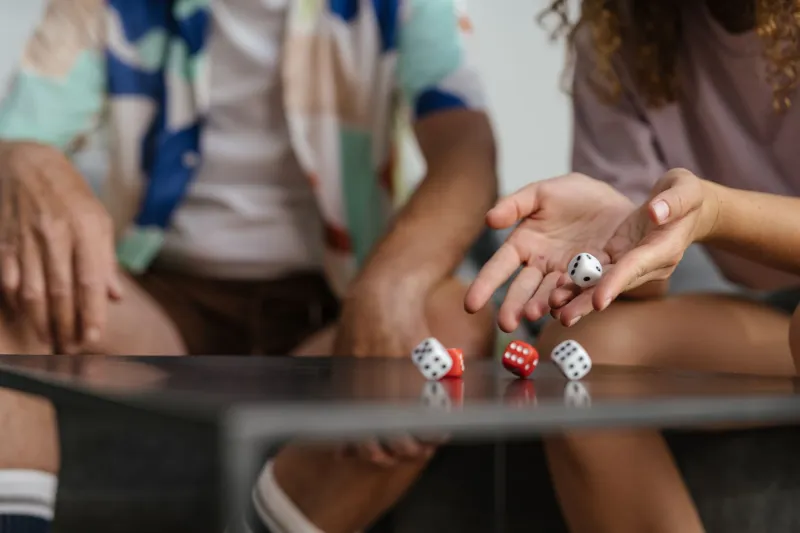
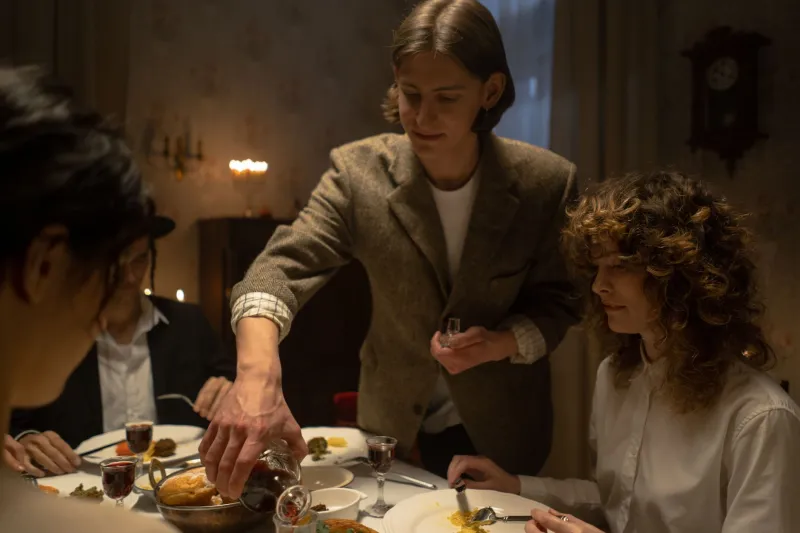
It's a Thursday night in Leeds and the loudest sound in the room is a handful of dice hitting a felt-lined tray. There's no bassline rattling the windows, no sticky floor, no bouncer deciding whether your outfit passes muster. Instead, there's a drag king in a waistcoat explaining the difference between a d20 and a d12 to a table of six, a pot of tea going cold beside a character sheet, and a group of strangers who met forty minutes ago and are already arguing, affectionately, about whether a rogue can sneak past a sleeping dragon.
Welcome to the queer tabletop night: part board game café, part community centre, part the best night out you've had in ages without ever leaving your seat.
A third space with a table in the middle
For years, the queer night out has been mapped almost entirely onto the dancefloor. And the dancefloor is brilliant — don't get us wrong. But it also asks a lot of you. It asks for money, for stamina, for a certain kind of confidence, for the ability to hear someone's pronouns over a speaker stack. It asks you to perform sociability in a room designed for volume.
Board game cafés, RPG nights and tabletop meetups offer something different: a structured reason to sit down with people. The game gives you a script. You don't have to think of something clever to say at the bar, because it's your turn and you need to decide whether to attack the goblin. Small talk becomes something you do sideways, while shuffling cards. For anyone who finds the traditional queer night out a bit much — and in 2026, with club closures and rising prices, plenty of us do — that's not a small thing. It's the whole point.
The scene has grown quietly across the UK: board game cafés in Manchester's Northern Quarter, Bristol and Sheffield running queer-friendly nights; libraries and community centres in Glasgow and Cardiff hosting RPG sessions; pub back rooms in Birmingham and Leeds turned over to one-shots and campaigns. Some are explicitly queer, some are queer-friendly by default, and some are run by people who simply noticed that the same faces kept turning up and decided to make it official.
Session zero is the new door policy
If you've spent any time in tabletop spaces, you'll have heard of session zero: the pre-game chat where everyone agrees on tone, boundaries and what they want from the story. In queer hands, it's become something more political. Organisers talk about lines and veils, the X-card, open-door policies. It's consent culture translated into a game mechanic — a way of saying, before anything happens, that you get to change your mind.
That ethos spills over into the room itself. Pronouns go on name tents, not just badges. Quiet corners exist for people who need a breather. Some nights are masking-friendly; others ask players to keep scenes low-intensity. Fidget toys, step-free access and clear, written rules aren't afterthoughts — they're the difference between a night that works for neurodivergent and disabled queers and one that doesn't.
The result is a social space that doesn't demand you decode it. You don't have to guess whether someone wants to talk to you or whether they're just being polite. The game handles the awkward bits. And for trans and non-binary players in particular, a table where everyone has already agreed to take each other's names and pronouns seriously can feel like a small, stubborn utopia.
Drag, dice and a bit of theatre
Then there are the nights that lean into the camp of it all. Drag-hosted Dungeons & Dragons sessions have become a fixture in several UK cities, with queens and kings donning dungeon-master robes and turning a goblin ambush into a pantomime. It makes sense: drag and RPGs share a love of costume, character and committing fully to the bit. A drag queen narrating your party's descent into a haunted crypt is, frankly, the kind of night out that London's Soho could only dream of.
But it isn't all swords and sorcery. Queer tabletop nights are running horror one-shots, sci-fi campaigns, romance-heavy indie games and the kind of chaotic party games that end in tears of laughter. The genre matters less than the format: a shared table, a clear set of rules, and permission to be a little bit ridiculous.
Sober by default, skint by necessity
One of the quietest radical things about the scene is how little it revolves around alcohol. Plenty of board game cafés don't serve booze at all; others do, but nobody blinks if you're on the elderflower pressé. For sober queers, that's a relief. For anyone whose budget has been swallowed by rent, it's a lifeline. A table fee and a coffee costs a fraction of a club night — and you get to go home with your hearing intact.
The cost-of-living crisis has reshaped queer social life in ways we're only starting to name. Nights that ask less of your wallet and more of your imagination are thriving for a reason. They're also, crucially, offline. No group chat, no doomscrolling, no performing your best life for an audience of strangers. Just a table, some dice and the person opposite you remembering it's your turn.
What the dancefloor can learn
None of this is an argument against clubs. Queer nightlife has always been a lifeline, and the dancefloor still holds histories that a board game café can't replicate. But the tabletop scene exposes something the club model often can't: that access isn't a nicety, it's the whole architecture. Who can afford to come? Who can physically get in? Who feels safe enough to be silly? Who gets to be the dungeon master, and whose stories get told?
Those questions don't answer themselves. The best queer tabletop nights are the ones that keep asking them — and keep making room for the person who's never rolled a die in their life.
Roll for belonging
The campaign continues next week. That's the other thing about a tabletop night: it asks you to come back. Community isn't built in a single Friday; it's built in the recurring commitment of showing up, learning the rules, and letting someone else have the spotlight for a scene. It's slower than a club night. It's also, somehow, more electric.
So go on. Roll for initiative, darling.