Craft, Cuppas and Queer Company: Why the Best Nights Out Now Involve a Glue Gun
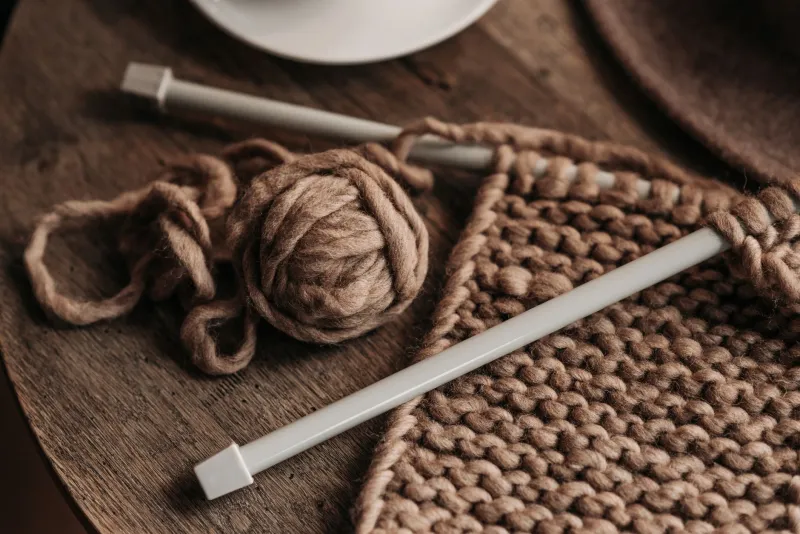
Friday night in Glasgow used to mean one thing for Maya: a queue outside a club, a coat-check ticket and a drink she didn't really want. These days she spends the first Thursday of the month surrounded by felt scraps, embroidery thread and a kettle that never stops. 'I wanted a queer space where I could actually hear people,' she says. 'And where nobody cares if you're any good at knitting.'
Maya runs Glue & Gossip, a monthly craft night in Govanhill that has become part of a wider shift. Across the UK in 2026, queer craft meetups are moving from the margins of community centres into the heart of social life. They are not trying to recreate the club. They are offering something different: a low-cost, sober-friendly way to be together, learn a skill and leave with something other than a hangover.
The anti-club is a table full of scraps
On paper, a craft night sounds gentle. In practice, it can be quietly radical. Queer spaces have long been built around bars and dancefloors, which is brilliant if you drink, love loud music and can afford a night out. It is less brilliant if you are sober, neurodivergent, broke, new to a city or simply tired of shouting over a bassline. Craft nights don't ask you to perform. They ask you to sit down, pick up a needle or a glue stick and see what happens.
The format varies. In Glasgow, Glue & Gossip leans towards collage, badge-making and the kind of chaotic zine pages that end up photocopied by the dozen. In Manchester, Queer Stitch Club is more textile-focused: knitting, crochet, visible mending and a pile of donated yarn that regulars raid like a jumble sale. In Bristol, Craft Queers Bristol rotates between ceramics, printmaking and paper crafts, with a pay-what-you-can materials table and a strict no-gatekeeping rule.
'I think people are hungry for a social space that doesn't cost £40 before you've even sat down,' says Rory, who co-runs the Manchester night. 'We get students, we get people in their fifties, we get people who've just moved here and don't know anyone. The craft is the excuse. The community is the point.'
Skill-sharing, not showboating
What strikes you at these nights is how quickly the hierarchy falls away. There is always someone who can teach a cable stitch, someone who knows how to fix a sewing machine, someone who has brought too many magazines and is delighted to offload them. But there is no syllabus and no pressure to produce something gallery-worthy. A wonky clay mug is still a mug. A patchy zine is still a zine.
Priya, who helps run Craft Queers Bristol, says the low-stakes nature is what makes it work. 'A lot of us spend all day being assessed or online or trying to be coherent,' she says. 'Here you can be bad at something in public and everyone just carries on chatting. That's weirdly healing.'
The sober-friendly angle matters, too. Not every craft night is alcohol-free, and plenty take place in pub back rooms where a pint is an option. But the default is a cup of tea, a biscuit and a conversation you can actually follow. For people in recovery, or anyone who has ever felt like the odd one out at a bar, that shift is significant. It is nightlife without the late licence—a different kind of after-dark, or early-evening, economy.
Where to get stuck in during 2026
Listings move around, so check each group's socials before you travel. These are the regular nights worth knowing about this year:
- Glue & Gossip, Glasgow – first Thursday of the month, Govanhill. Collage, zines and badge-making with a pay-what-you-can materials pot. Expect a queue for the kettle, not the door.
- Queer Stitch Club, Manchester – second Sunday afternoon, Northern Quarter. Knitting, crochet and visible mending; bring your own project or use the donated stash.
- Craft Queers Bristol – third Wednesday, Easton. Rotating workshops from ceramics to collage, with low-cost materials and a sober-friendly bar.
- Leeds Queer Zine Night – monthly at a city-centre community space. Photocopier, scissors, staplers and a lot of righteous anger.
- Cardiff Queer Craft Circle – fortnightly, Riverside. A gentle mix of knitting, embroidery and chat.
The rise of these nights doesn't mean clubs are dead. It means the queer social map is getting bigger. You can still dance until 4am. You can also spend a Wednesday gluing sequins to a cardboard frame and leaving with three new friends and a terrible pair of earrings. In 2026, that counts as a good night out.
Maya puts it more simply. 'We're not anti-club,' she says. 'We're pro-options. Sometimes you want bass. Sometimes you want a biscuit and someone to tell you your blanket stitch is fine.'