Shelf Life: The Queer Bookshops Rewriting What Community Looks Like
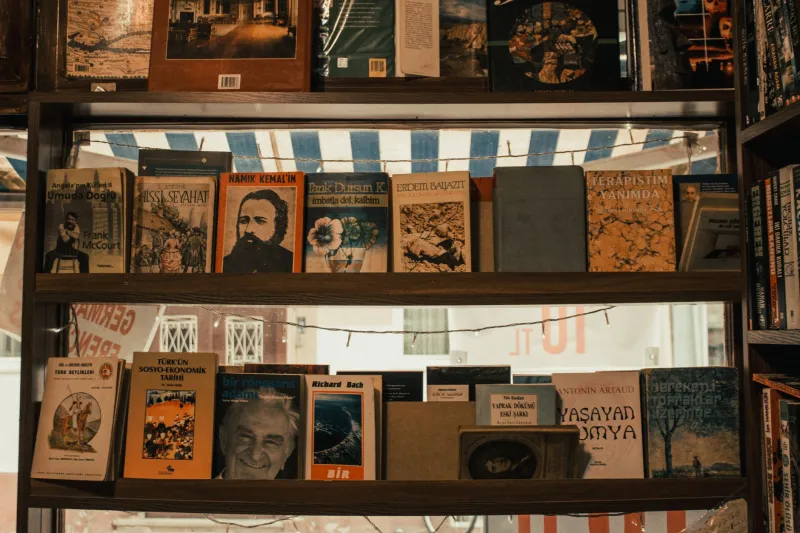
Walk into a queer bookshop on a Thursday evening and you'll find something the average gay bar can't offer: silence, a kettle, and nobody assessing your outfit. Increasingly, you'll also find thirty people crammed into the back for a trans book club, a zine-making table, or a sober social that finishes by nine so everyone can get the last train home.
It would be neat to call this a trend. It's more like a quiet reallocation of what community infrastructure means in 2026. Venues keep closing, rents keep climbing, and the commercial scene keeps narrowing towards hen parties and ticketed drag brunches. Into that gap have stepped independent booksellers who never set out to run a community centre but have ended up running one anyway — often on margins that would make an accountant weep.
Leeds: The Bookish Type
Up in Leeds, this shop has become a fixture for readers who want more than a Pride display in June. Its events calendar leans political and practical in equal measure: reading groups, author conversations, and low-cost workshops aimed squarely at people who've never felt welcome in a bookshop before. The stock is deliberately wide — pulp, poetry, theory, romance — because, as the shop's ethos goes, queer taste was never a single genre.
Glasgow: Category Is Books
Down in the southside, this is the kind of place where the till is often a conversation rather than a transaction. It's become a hub for trans and non-binary readers, hosts regular groups, and has a reputation for stocking small-press and self-published work that bigger shops won't gamble on. It also does the unglamorous work: signposting, mutual aid notices, a shelf of free pamphlets near the door.
Manchester: Queer Lit
In the Northern Quarter, this shop has built a following on curation as much as community. The events programme mixes big-name signings with smaller, stranger evenings — an evening of queer horror, a night of bad lesbian pulp covers, a reading group that has somehow survived three years of scheduling chaos. It's the kind of place you go in for one book and leave with four and a flyer for a protest.
Cardiff: The Queer Emporium
Arcade-based and gloriously pink, this one operates as a shop, a cafe and a de facto meeting point. It has become a standing fixture for trans socials and low-key evening events that don't require you to drink, shout or dress up. In a city where queer space has been thin on the ground, that's not a small thing.
London: Gay's the Word
No list like this is complete without the Bloomsbury original, trading since 1979 and still, somehow, going. It survived Section 28, raids and the brutal economics of bookselling, and it remains a place where the archive at the back is as important as the new releases at the front. Its events still skew towards the political, which feels right.
The zine shelf as archive
Small note, big point: the zine collections dotted through these shops — and institutional ones like the collection at Bishopsgate — are doing the work that publishers won't. Photocopied, stapled, badly proofread and completely irreplaceable, they document the parts of queer life that never get a book deal. Several shops now run free zine-making sessions specifically so that a seventeen-year-old with a grudge and a library card can put something into the world.
Sober, not sad
Ask anyone who's stopped drinking why they drifted out of the scene and you'll hear the same things: the awkwardness, the expense, the assumption that a night out means a hangover. Bookshop events have quietly absorbed that need without fuss. A reading group, a film screening, a craft evening — none of them hinge on a bar taking your money at the door.
The economics of pay-what-you-can
Here's the difficult bit. These places are not charities, however much they behave like them. Rents are up, energy bills are up, and the publishing industry's margins on small queer titles are thin enough to be invisible. That's why so many events now run on a pay-what-you-can basis, with a suggested ticket price and an unspoken rule that nobody gets turned away.
It's a quietly radical model, and a fragile one. It only holds if the people who can pay a bit more actually do.
How to be a good regular
Buy the book rather than the Amazon version. Buy the zine. Put a fiver in the tin even if the event was free. Sign up for the newsletter so the shop knows there's an audience. Turn up to the weird Tuesday thing. And if you've got a skill — a DBS check, a spare hour, a decent projector — tell them, because these places run entirely on borrowed labour and goodwill.
The commercial scene will keep selling you a night out. The bookshop on the corner is quietly offering something much harder to replace.