Permission to Look: The Queer Life-Drawing Sessions Rewriting the Studio Rules
There’s a particular sound that fills a queer life-drawing session just before the first pose: the rustle of paper, the click of pencil cases, and someone whispering, “Is this seat okay?” It’s not the roar of a club, but it has its own charge. On a damp Tuesday in Leeds, a community hall has been turned into a studio. The model — a trans man in his thirties — has chosen the playlist, set the first two-minute pose and explained, clearly, what he is and isn’t comfortable with. Nobody is here to be a muse in the old-fashioned sense. They’re here to look, carefully, and to draw.
Queer life-drawing classes and collectives have been quietly multiplying across the UK, from Bristol church halls to Glasgow zine shops and Manchester’s back-room bars. Some are gentle, body-positive afternoon sessions with tea and biscuits. Others are cabaret-style sketch nights where drag kings pose in full leather and the crowd is encouraged to whoop. What they share is a determination to rethink the traditional studio setup — who gets to look, who gets to be looked at, and what consent actually means when there’s a nude body in the room.
The old gaze and the new sketchbook
Traditional life drawing has a lot to answer for. For generations, the art-school model was treated as a silent object: passive, usually female, often thin, and frequently discussed in the third person while standing right there. The queer sessions I’ve been to don’t pretend that history doesn’t exist. They actively unpick it. Models are paid, briefed and in charge of their own poses. Some choose to be nude; others wear a harness, a dressing gown, a swimming costume or nothing at all. The point isn’t nudity for its own sake. It’s agency.
That shift changes the atmosphere. There’s less performance of connoisseurship and more curiosity. You’ll see fat bodies, disabled bodies, older bodies, top-surgery scars, stretch marks, tattoos and hair — all drawn without apology. Facilitators often open with a consent statement: no photography, no comments on the model’s body, no touching, and no assuming anyone’s pronouns. If a model wants to adjust a pose, they say so. If someone needs to leave, they can. It sounds basic. In practice, it’s quietly revolutionary.
Consent isn’t a disclaimer — it’s the whole medium
The best queer life-drawing nights treat consent as an ongoing conversation, not a box-ticking exercise. At a cabaret sketch session in Bristol last month, the performer began by explaining which parts of their body were fine to draw and which were off-limits, then invited the room to ask questions before the first pose. The result wasn’t awkward. It was funny, warm and weirdly bonding. People drew faster and looser because they weren’t worried about getting it wrong.
Good sessions tend to share a few practical habits. Models are paid fairly, not thanked with a box of Celebrations. The facilitator reads a short agreement at the start, including a reminder that drawing is not flirting. Phones stay in bags. There’s usually a designated “no-draw” zone near the door for anyone who wants to sit out. And if the session includes nudity, it’s flagged clearly in advance so nobody wanders in expecting a still life of a bowl of pears.
Beyond the M25
London gets the headlines, but some of the most interesting sketching is happening elsewhere. Leeds has a thriving DIY art scene with queer-friendly sessions in community centres and indie cafés. Manchester’s venues often pair life drawing with DJs or zine fairs. Bristol’s collectives lean into body positivity and accessible pricing. Glasgow and Edinburgh have small, friendly groups that meet in bookshops and bars. Cardiff, Sheffield, Norwich and Brighton all have regular or pop-up sessions if you know where to look. Birmingham’s queer arts crowd is increasingly using life drawing as a low-pressure social anchor.
Finding them takes a bit of legwork, but it’s doable. Search “queer life drawing” plus your city on Instagram and Eventbrite. Check local LGBTQ+ centres, independent bookshops and community noticeboards. Ask in queer Facebook groups or Discord servers. Look for phrases like “body positive”, “trans-inclusive”, “pay-what-you-can” and “consent-led” — they’re usually a good sign. Then send a message before you book. Ask whether the model is paid, whether the space is wheelchair accessible, whether materials are provided, and how they handle pronouns and pronouns on name badges. A good organiser will be glad you asked. A defensive one is a red flag.
Sketching outside the silence
Cabaret-style sketch nights are a great entry point if the idea of a silent studio makes you want to hide under a table. They’re louder, sillier and often alcohol-free or low-alcohol, with performers posing between numbers while the crowd draws, chats and occasionally applauds. The consent work still happens, but it’s wrapped in camp and chaos. If you’re someone who finds traditional life drawing a bit stiff, start here.
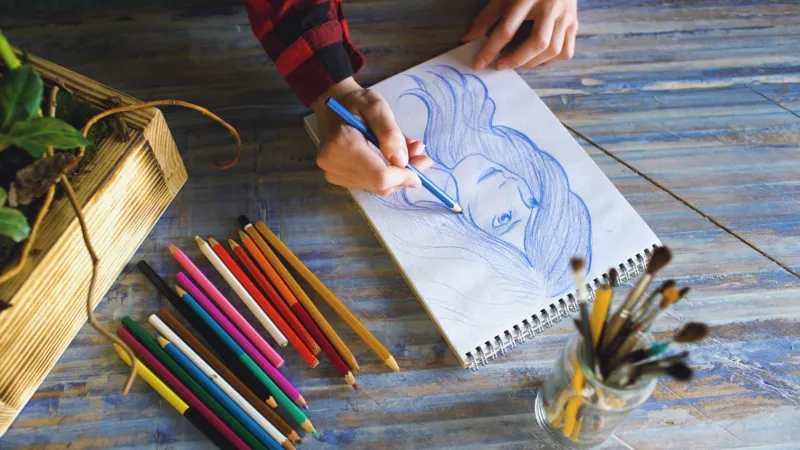
What to bring? A sketchbook you don’t mind ruining, a couple of pencils, and absolutely no expectations of producing anything good. The etiquette is simple: arrive on time for the consent briefing, don’t take photos, don’t comment on bodies, and don’t share drawings online without checking with the model. Tip the model if there’s a collection. Draw badly and enjoy it.
Why it matters more than we admit
We spend a lot of time in queer spaces talking about being looked at — on apps, on nights out, in gyms and on dance floors. Queer life drawing offers something different: a structured, gentle way to look and be looked at without the pressure to perform. It’s slow. It’s a bit awkward. It smells of graphite and cheap tea. And in a year when so much of our social life has been flattened into feeds and RSVPs, there’s something genuinely nourishing about sitting in a room with strangers, paying attention to a body that has chosen to be seen.
As winter 2026 sets in, a sketchbook and a £10 ticket might be the most radical night out you book. No dress code, no hangover, no small talk required. Just pencils, permission and a room full of people learning to look again.