Ninety Minutes of Belonging: Inside the Queer Fan Groups Rewriting the Away Day
Saturday, 3pm. The train is heaving, the scarves are out, and someone near the window is trying to start a chant about a defender who has not had a good season since 2023. It is a scene repeated across the UK every weekend. What is newer is the group of fans in the corner carriage wearing rainbow pin badges alongside their club colours, texting the group chat to confirm which pub is the meet-up and whether anyone needs walking to the ground.
Welcome to the quiet, noisy work of the UK’s queer football supporters’ groups. They are not a monolith. Some are official club affiliates with a seat on a fan forum. Some are loose collectives of mates who meet at the same away-day pub. Some are loud, banner-waving and unapologetically camp. All of them are asking the same question: can football’s terraces be made to feel like they belong to everyone, not just the people who have historically shouted the loudest?
From the back of the stand to the group chat
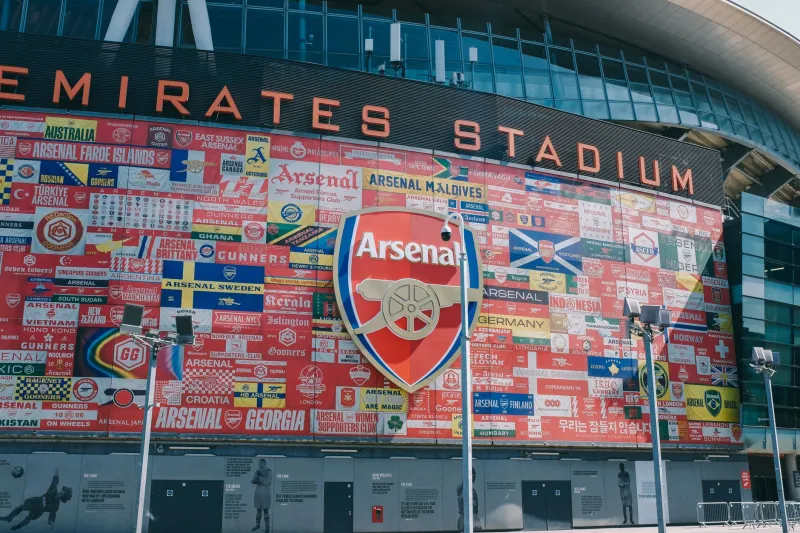
The infrastructure is often invisible until you need it. Arsenal’s GayGooners, Manchester City’s Canal Street Blues, Norwich’s Proud Canaries, Crystal Palace’s Proud Eagles and Everton’s Rainbow Toffees are among the groups that have become familiar names in the Pride in Football network, an umbrella body connecting LGBTQ+ fan communities across the leagues. In 2026, that network is less about one-off photo opportunities and more about the unglamorous stuff: shared travel plans, ticket swaps, meeting points, and a WhatsApp group that lights up when a homophobic chant starts in a stand.
Down the pyramid, the vibe shifts. Dulwich Hamlet’s support has long had a queer-friendly reputation, and lower-league terraces often feel less policed by tradition — fewer prawn sandwiches, more room to be weird. The queer fans I speak to are careful not to romanticise the lower leagues. Homophobia is not a Premier League exclusive. But smaller crowds can mean tighter communities, and tighter communities can mean faster pushback when someone says something out of order.
The term ‘queer ultras’ gets thrown around, half-jokingly. It fits the aesthetic: drums, banners, coordinated claps, a refusal to be polite about prejudice. But the real ultra behaviour is the organising. Someone books the minibus. Someone checks the pub is actually welcoming. Someone keeps an eye on the younger fan who has never been to an away game before. That is not glamorous. It is the whole point.
The away day is the test
Home games are one thing. You know the stewards, the layout, the quickest route to the bar. Away days are where the cracks show. Train cancellations, packed concourses, aggressive banter that tips into something uglier, and the low-level dread of being stuck in a stand where the away support has decided to make a point about ‘rent boys’ or ‘transvestites’.
The ‘Chelsea rent boy’ chant was classified as a hate crime by the Crown Prosecution Service back in 2022, a genuinely useful bit of history. It has not disappeared. Queer fan groups report that the same tired songs still surface, often when a team is losing or when a player has had a bad touch. What has changed is the response. Fans are filming it, reporting it to stewards, using Kick It Out’s reporting channels, and — crucially — checking in with each other afterwards. A group chat can be a safeguarding tool. A pre-agreed exit plan can be the difference between a good day and a grim one.
There is also the matter of chanting culture itself. Queer fans are not just asking for the bad chants to stop. They are writing better ones. Some groups have adopted their own riffs, reclaimed insults, or turned club anthems into something sillier and more inclusive. At one away end last season, a small cluster of fans responded to a tired homophobic dirge with a perfectly timed chorus of ‘we can hear you, we’re still here’. It was not a silver bullet. It was a reminder that the terrace is a stage, and the script is not fixed.
What clubs still get wrong in 2026
Plenty. The most common complaint is rainbow-washing: a Pride fixture, a flag in the corner, a social media post, and then nothing for the other 364 days. Queer fan groups want funded fan liaison, not just a photo op. They want clubs to train stewards on how to handle homophobic abuse without making the victim feel like the problem. They want gender-neutral toilets at grounds, not just a ‘family stand’ that assumes everyone fits a neat binary. They want affordable away travel and ticket allocations that do not make community-building a luxury.
Some clubs are better than others. The ones that get it right tend to do the boring things well: regular meetings with fan groups, clear reporting processes, visible support from players and managers, and a willingness to condemn their own supporters when needed. The ones that get it wrong treat LGBTQ+ fans as a marketing demographic rather than a constituency with legitimate demands.
There is also a generational shift worth noting. Younger queer fans are less interested in asking politely for inclusion and more interested in building their own spaces within the game. They are not waiting for a club to hand them a lanyard. They are making zines, organising meet-ups, and turning up with flags that say exactly who they are.
The new terrace code
Football’s terraces have always been contested ground. The queer fan groups are not trying to sanitise them. They are trying to widen them. That means holding space for the camp, the political, the noisy and the nervous. It means accepting that a safe stand is not a quiet stand. It means understanding that belonging is built in the small, repetitive rituals: the same pub, the same train, the same group chat, the same daft chant.
On the train home, the result matters less than the fact that everyone got back okay. The group chat pings with a photo of the away end, a thumbs-up, a joke about the referee. Tomorrow there will be another match, another stand, another chance to make the culture a little less hostile and a little more fun. Queer fans are not guests at football. They are the home support now.