Mud, Mulch and Mutual Aid: Why Queer Growers Are Rethinking the Allotment
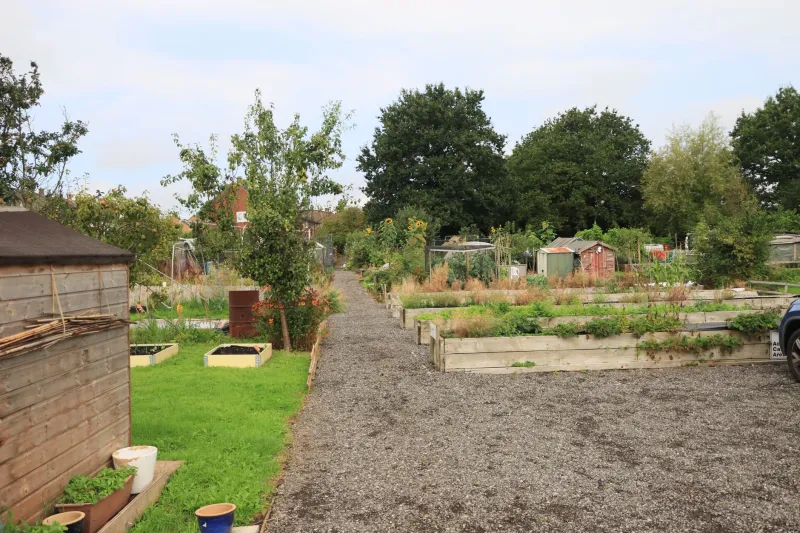
On a damp Saturday morning in Leeds, the most radical thing happening is a kettle. It sits on a camping stove in a shed that smells of creosote and damp wool, while four people in muddy boots argue gently about whether the rhubarb is ‘theatrical’ or just ‘showing off’. Outside, raised beds are labelled in marker pen: KALE (QUEER), BORED BEANS, MINT — DO NOT TRUST. This is not a club night. It is not a brunch. It is an allotment, and it is quietly becoming one of the most useful queer spaces in the country.
Allotments have always been a bit queer in the old sense of the word: odd, stubborn, slightly out of step with the times. You get a patch of land, a shed with a wonky door, and a set of unspoken rules about hosepipes. But across the UK, queer growers are taking that oddness and making something deliberate out of it — safer outdoor space, shared skills, and a way to be together that doesn’t involve a round of drinks or a cover charge. Some are on council sites, some on housing association land, some in community gardens that never quite got round to being formal. The common thread is dirt, company, and a refusal to let the countryside be someone else’s territory.
The shed is the social club
Take a group in east Leeds who call themselves, depending on the day, either a growing collective or ‘the compost mafia’. They share a half-plot behind a housing co-op: six people, one shed, a water butt that leaks, and a rota for watering that is enforced with passive-aggressive emojis. Dee, 34, joined after a year of feeling like every night out required a personality transplant. ‘I wanted somewhere I could be quiet and still be with people,’ they say. ‘Now I spend Saturday mornings arguing about courgette spacing and it’s the most social I’ve been in ages.’
In Glasgow, a smaller crew share a ten-rod plot on a council site with a three-year waiting list. They built a ramp to the shed, keep a stash of spare gloves for visitors, and have a strict no-advice-unless-asked rule for new growers. One of them, Morag, 41, describes the plot as ‘the only place I’ve ever been where nobody asks me to explain my pronouns twice and nobody expects me to be good at sport’. They grow tatties, kale, herbs, and an alarming amount of chard. The chard is a warning.
In Bristol, a group has a plot under a flyover, which sounds grim until you realise it is sunny, accessible by bus, and has a view of a mural that looks like a giant courgette in a waistcoat. In Norwich, a trans grower called Sam took on a half-plot after a local LGBTQ+ WhatsApp group advertised it. He grows tomatoes, chillies, and ‘a lot of things that die dramatically in November so I can feel something’. Names have been changed here, by the way, because allotment politics is real and the courgette glut is realer.
The serious bit: land, rent and who belongs
Allotments are not a cute loophole in the housing crisis. They are land, and land is political. Council allotment budgets have been squeezed for years, waiting lists in cities can run to hundreds of names, and rents that once felt like pocket money are creeping up as sites get eyed for development. A plot is not secure just because it has a shed on it.
There is also the question of who gets to feel at home outdoors. The British countryside is often sold as a neutral, healing place, but it isn’t neutral if you are the only Black person on the site, or the only trans person at the village fete, or a disabled grower staring at a gate you cannot open. Rural queer life exists, obviously, and has done for ever. But it can be isolating, and the nearest queer venue might be a bus, a train, and a taxi away. Allotments sit in a useful middle ground: not the wilderness, not the club, but a patch of ground you can lock up at night.
That means queer growing groups have to be careful about how they arrive. Taking over a neglected plot is one thing; acting like you invented vegetables is another. Long-standing allotment holders — many of them older, working-class, and not remotely impressed by your no-dig Instagram — are the people who know which corner floods and which committee member will fight you over a hedge. Solidarity works better than a takeover. Bring biscuits. Ask questions. Learn the site.
How to find a plot without losing the will to live
Start with the council. Search your local authority’s allotment page, find the allotment officer, and ring them. Ask about half-plots, temporary plots, and sites with shorter waiting lists. Ask about water, toilets, parking, public transport, shed rules, bonfires, and whether the site has a disability access fund. Visit at different times of day. Talk to the site rep. If the rep is terrifying, talk to someone else.
Then widen the search. Housing associations sometimes have land. Churches and schools sometimes have land. Community gardens often need volunteers before they offer plots. Local mutual aid groups, queer housing co-ops, and gardening charities may know about unused corners. Put a note in the window of a queer café. Ask on the group chat. The best plots often come through people, not portals.
Costs vary wildly. A council plot might be £30 to £120 a year, but check whether water is included and whether you need insurance. Some sites require membership of a national allotment body. Some don’t. Ask what happens if you cannot manage the plot for a season. Ask if there is a communal area you can help with instead of taking on a full ten rods. A half-plot is still a lot of ground when the slugs arrive.
Starting your own queer-growing collective
Keep it small at first. Four to six people is plenty. One named tenant on the lease, a simple written agreement between the rest of you, and a shared understanding of who pays what. Open a bank account or use a treasurer’s spreadsheet; do not rely on vibes alone. Look into cheap community garden insurance. Ask a local allotment association for advice, even if they seem baffled by you. They have seen worse.
Set norms early. No assumed expertise. Pronoun rounds if that is useful. Quiet hours. Scent-free days if people need them. Tasks that work for different bodies: sowing at a table, filling pots, labelling, making tea, fixing the gate. Accessibility is not a bolt-on; it is the difference between a group and a clique. And decide how you will handle conflict before the first argument about the compost heap. There will be a first argument about the compost heap.
Grow easy things first. Potatoes, beans, salad, herbs, courgettes. Buy plug plants if you need to. Accept that some things will fail. The first year is for learning the site, not for winning prizes. The second year is for learning that you planted too much. The third year is for foisting rhubarb on neighbours.
Slug diplomacy and other small joys
There is no elegant way to say this: slugs will test your politics. You can try beer traps, copper tape, wool pellets, hand-picking at dusk, or the ancient art of pretending you did not see them. You can also decide that a holey leaf is not a moral failure. The allotment is not a productivity contest. It is a place where you can be bad at something in public and still be welcome.
That might be the real draw. Queer life is often scrutinised, priced, and performed. A plot asks none of that. It asks you to turn up, water the beans, and maybe help fix the fence. It gives you weather, worms, and a shed that smells of somebody else’s grandad. It gives you a reason to be outside in November when the pub feels too loud and the group chat feels too much.
The courgettes will come. The slugs will come. The committee will have opinions. But somewhere between the kettle and the compost, a different kind of queer space is taking root — one that is muddy, practical, and open to anyone willing to pull up a weed and stay a while.