Monsters, Matinees and Mutual Awe: Why Queer Horror Nights Are the UK’s Softest Scare
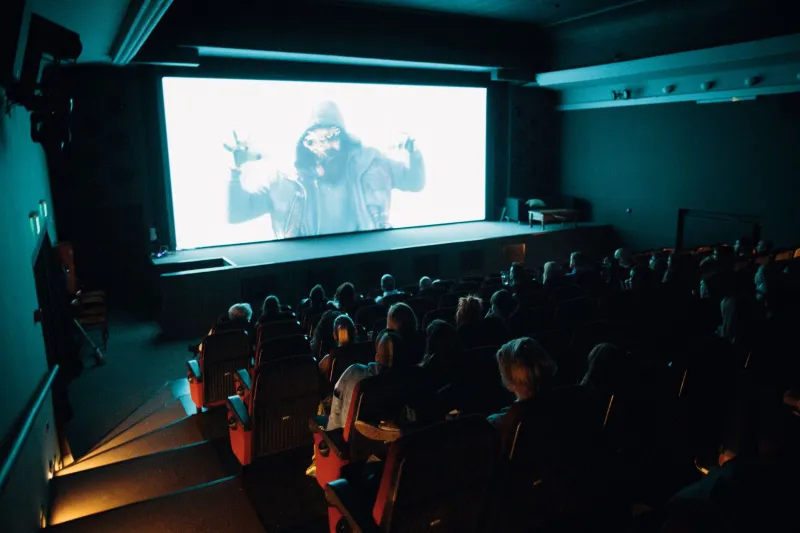
Horror has always been a bit queer. The monster is the outsider. The final girl survives by refusing to play by the rules. The haunted house is just a family home with the lid off. But something has shifted in the UK: queer horror nights are no longer a niche footnote in the festival programme. They’re a regular fixture — basement screenings, cult retrospectives, DIY VHS nights — where the shared gasp does something surprisingly tender.
As of November 2026, you can find queer horror programming in Glasgow, Manchester, Bristol, Cardiff, London and plenty of places in between. Some nights are polished, with proper projection and a bar. Others are gloriously scrappy, with a laptop, a borrowed projector and a room full of people who have agreed to be scared together. Both versions work. The point isn’t the budget. The point is the agreement.
Why fear feels like community
‘Horror gives you permission to feel things you’re usually told to swallow,’ says Mara, who programmes Cursed VHS at Bristol’s Cube Microplex. ‘Fear, disgust, desire, grief, laughter — they all sit right next to each other. For queer audiences, that’s not a stretch. That’s Tuesday.’
That proximity is part of the appeal. A queer horror night isn’t just a screening with a rainbow flag taped to the door. It’s a space where the subtext is allowed to become text. The monstrous feminine, the repressed queer villain, the body that won’t behave — these are not just tropes to be dissected. They’re images that can feel weirdly affirming when you watch them with the right people.
And the right people are often the ones who know when to laugh. Camp and fear are not opposites. A well-timed cackle during a ridiculous kill can be a release valve, but it can also be a form of recognition. You laugh because you’ve been there. Maybe not the machete, but the feeling of being looked at like you’re the problem.
The programmers making the cuts
Curation matters. A good queer horror night isn’t just a random shuffle through Shudder. It has a shape: short films before features, a local maker Q&A, a double bill that puts an old classic in conversation with something new. It also has boundaries. Content warnings are standard. So are subtitles, low lighting during the exit, and a quiet corner for anyone who needs a minute.
‘We always say: you can leave. You can come back. You can sit at the back and scroll your phone. Nobody is going to judge you,’ says Jules, a regular at Final Girls Friday at Glasgow’s CCA. ‘That sounds basic, but it changes the room. People relax. They gasp louder. They actually talk to each other afterwards.’
Safe-space etiquette isn’t about policing every sentence. It’s about small, consistent choices. Don’t touch anyone without asking. Don’t spoil the ending for the person next to you. Don’t explain the kill to the room unless you’ve been invited. Don’t assume everyone is drinking. Don’t make the new person feel like they’ve wandered into a private joke. And if you’re programming, pay your speakers, caption your films and make sure the accessible entrance is actually open.
A 2026 guide to standout nights
Final Girls Friday — Glasgow CCA Monthly, affordable, and genuinely friendly. Expect final-girl classics, queer subtext and a post-film chat that doesn’t turn into a lecture.
Cursed VHS — Bristol Cube Microplex Basement energy, lo-fi print quality, zero pretension. The kind of night where a scratched-up tape becomes part of the atmosphere.
Monster Matinee — Rio Cinema, Dalston Sunday afternoons, camp classics, sober-friendly. A good entry point if you’ve never been to a queer horror night before and you’d rather not start in a pitch-black basement.
Slash & Burn — Manchester’s Cultplex Queer slashers, loud crowds, optional dress code. Less delicate than some nights, but the consent rules are clear and the door team are on it.
The Scream Test — Cardiff Queer Emporium Short films from local makers, followed by a feature. A nice reminder that queer horror isn’t just a nostalgia project; people are making it now, in the UK, on tiny budgets.
Host your own without making it weird
Start small. A pub back room, a community centre, a friend’s flat with a decent projector. Get the basics right: a public screening licence, working subtitles, content warnings, a quiet space, and a clear statement that harassment gets you removed. Don’t call it a safe space unless you’re prepared to do the work of making it one.
Choose films with intention. Pair a canonical queer-coded horror with a short from a local filmmaker. Program something old, something new, something that makes people go ‘what was that?’ in the best way. And don’t over-programme. Leave time for people to talk, smoke outside, swap numbers, complain about the ending.
The thrill isn’t just seeing queer desire and monstrosity on a big screen. It’s seeing it with other people, in the dark, and feeling the room breathe together. Fear is a strange kind of intimacy. Queer horror nights have figured out how to hold it gently.