Turn It Up, Talk It Over: The Queer Listening Bars Rewriting the Rules of a Night Out
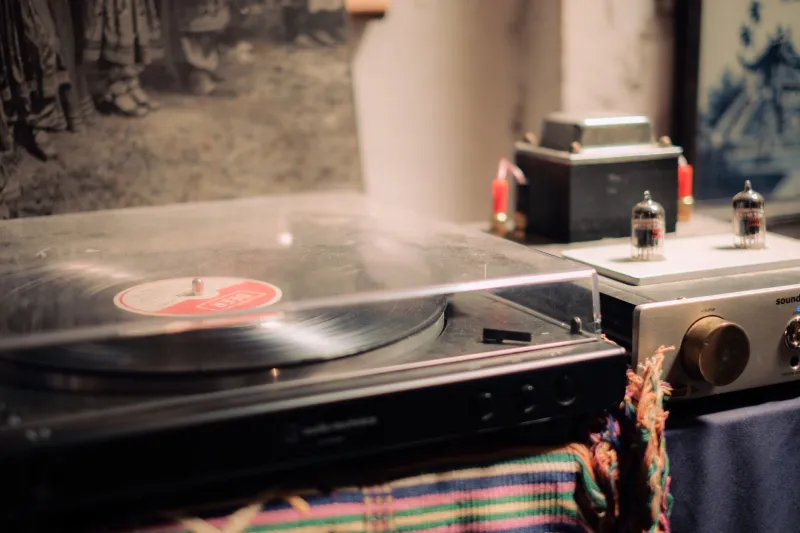
There’s a particular kind of hush in a Glasgow basement on a Thursday. Not the awkward hush of a first date, nor the reverent hush of a library. It’s the hush of thirty people listening to one side of a record, glasses down, phones face-up, waiting for the crackle before the first track. Welcome to the queer listening bar: part audiophile sanctuary, part social club, part antidote to the endless scroll.
These rooms are not new. Hi-fi bars have been a thing for decades, mostly in Japan, mostly coded as straight, male and slightly intimidating. But in 2026, a growing number of queer promoters, selectors and bar owners across the UK are taking the format and making it feel like ours. The result is a softer alternative to club volume and app-based dating: a night out where the music still matters, but so does the person sitting next to you.
The case for a quieter kind of loud
Let’s be clear: clubs are not the enemy. A proper queer club night can be a glorious, sweaty, life-affirming thing. But not every night needs to be a 120-decibel endurance test. Sometimes you want to hear yourself think. Sometimes you want to meet someone without the pressure of a dark room and a pounding bassline. Sometimes you want to geek out about a Prefab Sprout B-side with a stranger who actually gets it.
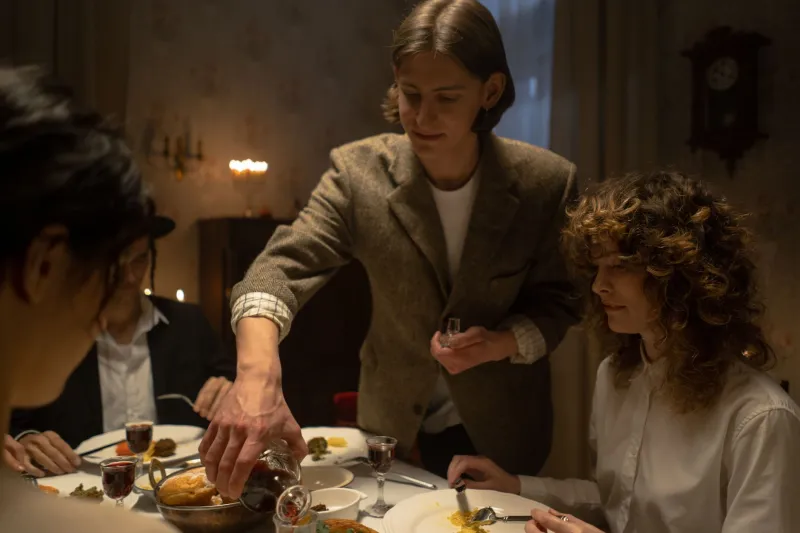
That’s where the listening bar comes in. The format is simple: a decent sound system, a curated selection of vinyl or high-res digital, a small capacity and a rule that the music is there to be listened to, not talked over. In practice, it’s a bit like a living room party with better speakers and a stricter door policy. You can nurse a negroni for an hour. You can read the liner notes. You can ask the person next to you what they thought of side two. Nobody is going to judge you for leaving before midnight.
How it works (and how not to be that person)
Every listening bar has its own vibe, but the etiquette is pretty universal. Think of it as the queer social contract, with a turntable in the middle.
One side at a time. The selector is not a jukebox. They’re playing a whole side of a record for a reason. Don’t ask them to skip. Don’t request a song in the middle of a track. If you want to hear something, wait for the gap between sides and ask nicely.
Phone down, ears up. This is not a camera roll opportunity. Some bars have a strict no-phones policy; others just expect you to keep it face-down. Either way, the point is to be in the room. If you need to text, step outside.
Talk at conversation volume. The music is loud enough to hear, quiet enough to talk over. That’s the sweet spot. If you find yourself shouting, you’re doing it wrong. If you find yourself whispering, you’re probably fine.
Ask before you join. Queer spaces are friendly, but not every table is an open invite. A simple ‘mind if I sit here?’ goes a long way. Same goes for cruising: this is a social space, not a pickup joint. Read the room, respect the no, and don’t make it weird.
Buy a drink, tip the selector. These are small venues with thin margins. If you’re going to occupy a seat for three hours, keep the drinks coming. And if the selector played something that rearranged your brain, tell them.
From Glasgow to Bristol: where the needles are dropping
The scene is still small, but it’s growing. In Glasgow, you’ll find basement bars with warm-sounding speakers and a queer selector night that leans into soul, ambient and the odd bit of Cocteau Twins. Bristol has a community-run hi-fi library that hosts Sunday afternoon sessions: bring a record, leave with a new friend. Manchester’s listening parties often come with zines and a relaxed dress code. London has a cocktail bar with a strict no-phones policy and a penchant for queer disco. Leeds and Brighton are getting in on the act too, with pop-up listening rooms in cafes and community centres.
The standout nights tend to have names that sound like they belong on a mixtape: Side A Social, Deep Cuts Soft Talk, The B-Side Club. They’re not trying to be exclusive. They’re trying to be intentional. You’ll find flyers in queer bookshops, announcements on Instagram, and a crowd that’s a mix of audiophiles, club refugees, sober curious folks and people who just want to talk about music without shouting.
Why queer listeners are reclaiming the audiophile bar
For a long time, the audiophile world felt like a boys’ club. Expensive cables, obscure pressings, a certain kind of beard. Queer curators are changing that. They’re bringing in records that don’t fit the canon. They’re prioritising comfort over cool. They’re making space for people who don’t know the difference between a cartridge and a stylus, but know what they like.
There’s something radical about a room full of queer people listening to a whole album side together. It’s slow. It’s tactile. It’s not optimised for the algorithm. In a culture that wants us to swipe, stream and scroll, the listening bar asks us to sit still and pay attention. That’s a kind of intimacy you can’t download.
And it’s not just about the music. These spaces are sober-friendly, neurodivergent-friendly and low-pressure by design. You don’t have to dance. You don’t have to look a certain way. You just have to show up and listen. For a lot of us, that’s the night out we’ve been waiting for.
A night out that leaves you better
The best queer listening bars don’t feel like a scene. They feel like a living room with better acoustics. You leave with a new record in your bag, a new number in your phone, and the feeling that you’ve actually talked to someone rather than just shouted at them. In 2026, that’s a small revolution. And it sounds great on vinyl.