The Price List Is the Point: Inside the UK’s Trans-Affirming Barbershops
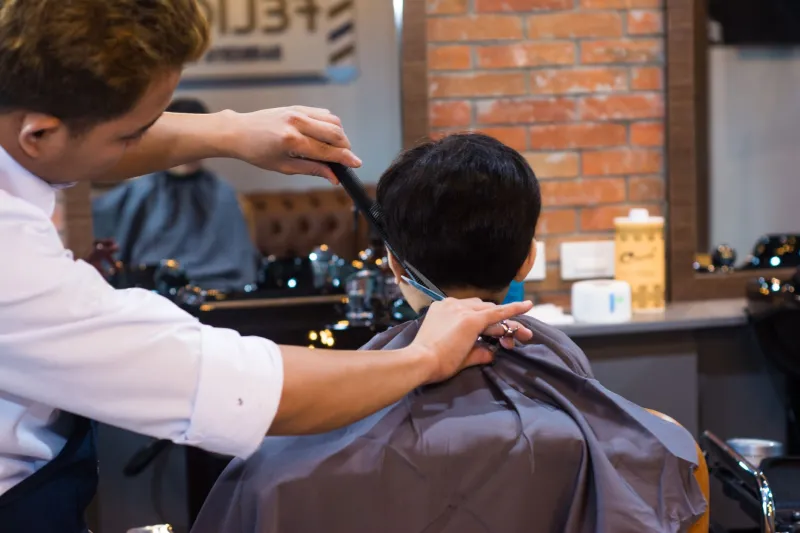
There’s a particular sort of dread that comes with pushing open a barbershop door. It isn’t the clippers. It’s the question that meets you at the chair: “So, what are we doing today?” For plenty of queer and trans people, that question isn’t idle chatter—it’s a pop quiz with a mirror attached. You do the maths: which version of yourself is safe to describe? Which words will land? Is the person holding the scissors going to hear “shorter on the sides, softer on top” and understand, or will they hear something else entirely?
In 2026, the answer increasingly depends on where you book. Across the UK—from Brighton’s North Laine to Manchester’s Northern Quarter, from a side street in Leeds to a converted shopfront in Glasgow—a growing number of barbershops and salons are rewriting the rules of the chair. Not with neon slogans or rainbow bunting, but with the small, practical stuff: a gender-neutral price list, a silent-appointment option, a consent script that begins before the cape goes on. The result is a quiet reframing of what a haircut can be—less a test you have to pass, more a service you get to shape.
The price list is a political document
Start with the thing most shops stick by the till. The traditional list still reads like a relic: “Men’s cut £22. Women’s cut £38. Kids £15.” For anyone who is non-binary, transitioning, or simply existing somewhere between those columns, the list asks you to make a declaration before you’ve even taken your coat off. Which queue do you join? Which price do you pay? Which version of yourself do you hand over to the person with the clippers?
Gender-neutral pricing isn’t new. Open Barbers in London has been running a pay-what-you-can, gender-neutral model for years, and it remains a blueprint. But what’s changed is the spread. In 2026, more UK shops are ditching the binary list—not as a marketing gimmick but as a basic courtesy. A cut is a cut. Length, time and technique set the price, not the gender the shop assumes you have. It sounds small. It isn’t. A price list is often the first thing you read in a shop, and the last thing you want to argue about. When it stops asking you to categorise yourself, the whole room loosens.
Silence is a service, not a snub
Then there’s the chatter. The barbershop has a reputation as a place of banter, and for some that’s the appeal. For others—especially autistic people, anxious people, and anyone who has been misgendered in a chair before—the expectation to perform small talk is its own kind of toll. The new wave of queer-friendly shops has started treating quiet as a feature, not a failure. Some offer “silent appointments” you can tick at booking. Some have low-sensory hours: dimmed lights, no music, no hairdryers going at once. Some hand you a card at the start—green for “chatty”, amber for “happy to talk if you start”, red for “please let me sit in peace”.
It’s hospitality, not coldness. A good barber reads the room; a great one lets you set the temperature.
Chair-side consent is the whole ballgame
The most important shift, though, happens in the inches between the mirror and the scissors. Chair-side consent means asking before touching: “Can I move your head?”, “Is it okay if I touch your neck?”, “Do you want to see the back before I finish?” It means not narrating the cut with gendered assumptions—no “lovely feminine shape”, no “sharp masculine finish” unless you’ve asked what language someone uses. It means understanding that for a trans client, a haircut can be the first step of a transition, the last step of one, or neither; it can be a big chop, a trim before a wedding, a reset after a bad week.
Shops are catching on. Barbering courses now include trans-awareness modules; some UK shops run internal scripts for name and pronoun checks at the till; others train staff on scalp sensitivity, binding, and the way hormones can change hair texture. None of it is rocket science. It’s the difference between assuming and asking.
From the chair to the community
What’s striking is how often the chair turns out to be the doorway. Shops that get the basics right tend to attract more than appointments. In 2026, queer-friendly barbers are hosting clothes swaps, zine libraries, trans peer-support drop-ins and pay-what-you-can cut days for people who can’t afford a £40 trim. Some run “big chop” evenings for anyone ready to say goodbye to long hair; others partner with local LGBTQ+ charities to offer free cuts for trans teens. The high street has lost plenty of community spaces. The barbershop, oddly, is becoming one of them—not because it set out to be a hub, but because it stopped making people feel like a problem.
High street, low-key
None of this exists outside the economy. Rents are brutal, chairs are expensive, and a gender-neutral price list won’t fix a broken high street. But it’s a signal. It tells you who a shop is for. In Brighton, Manchester, Leeds, Glasgow, Bristol, Cardiff and a hundred smaller towns, that signal is getting louder—not through advertising, but through the quiet relief of sitting down and not having to explain yourself.
So next time you book a cut, read the price list. Check the booking form for a silent option. Look for a shop that asks before it assumes. The revolution might not be televised. It might just be a decent fade, a fair price, and a barber who says, “Tell me what you want—and I’ll listen.”